New (ish!) Arrivals
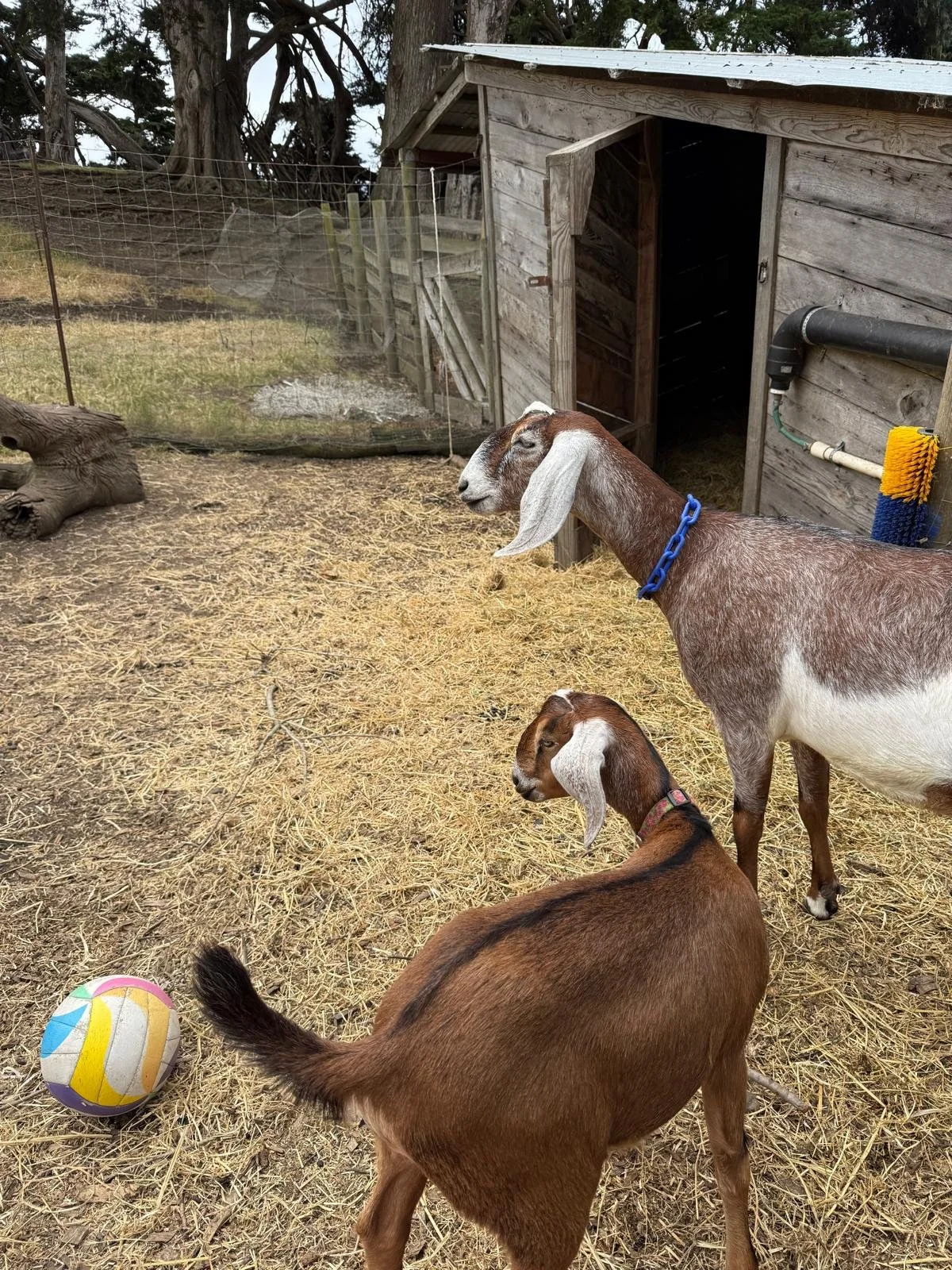
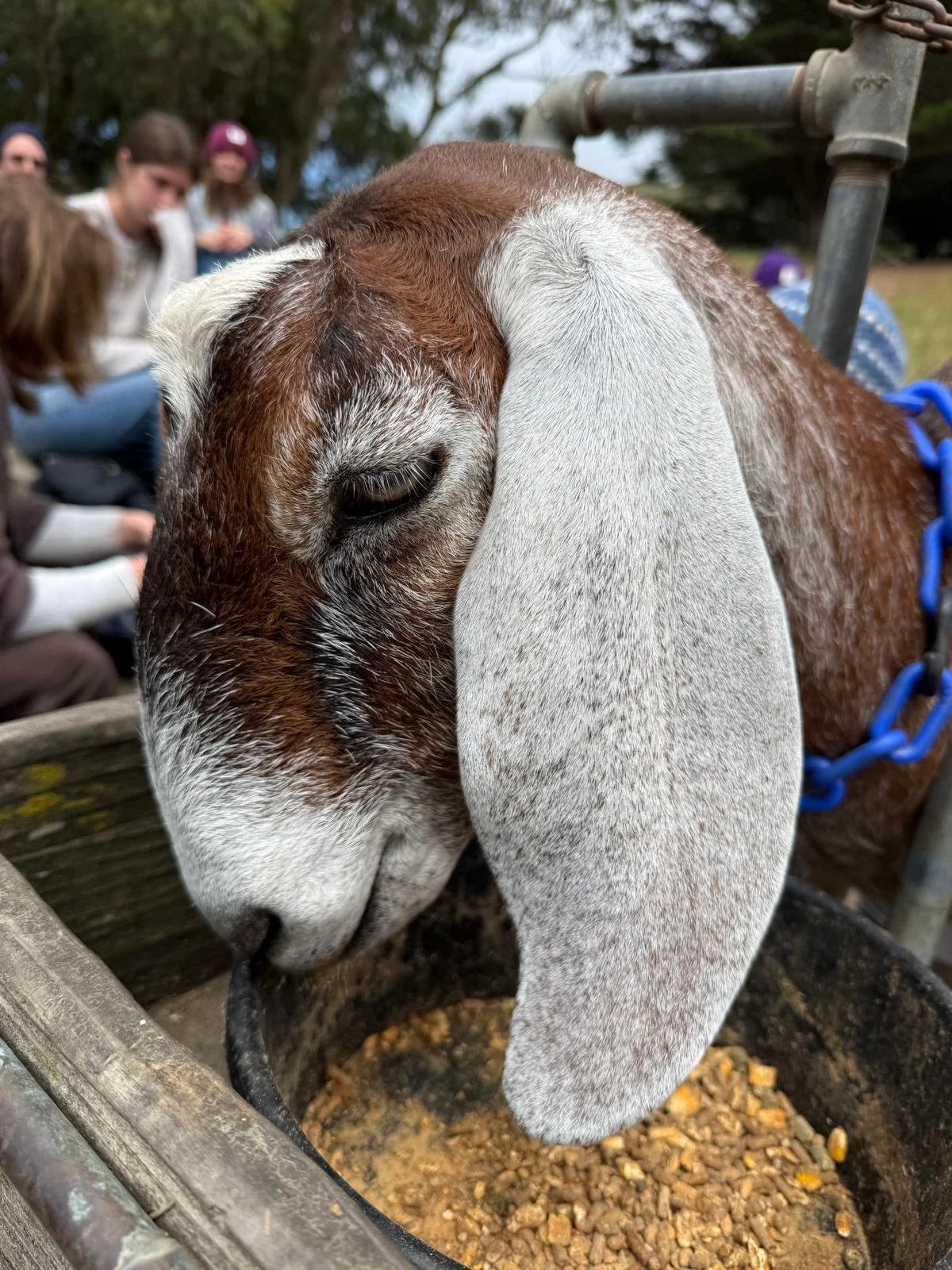
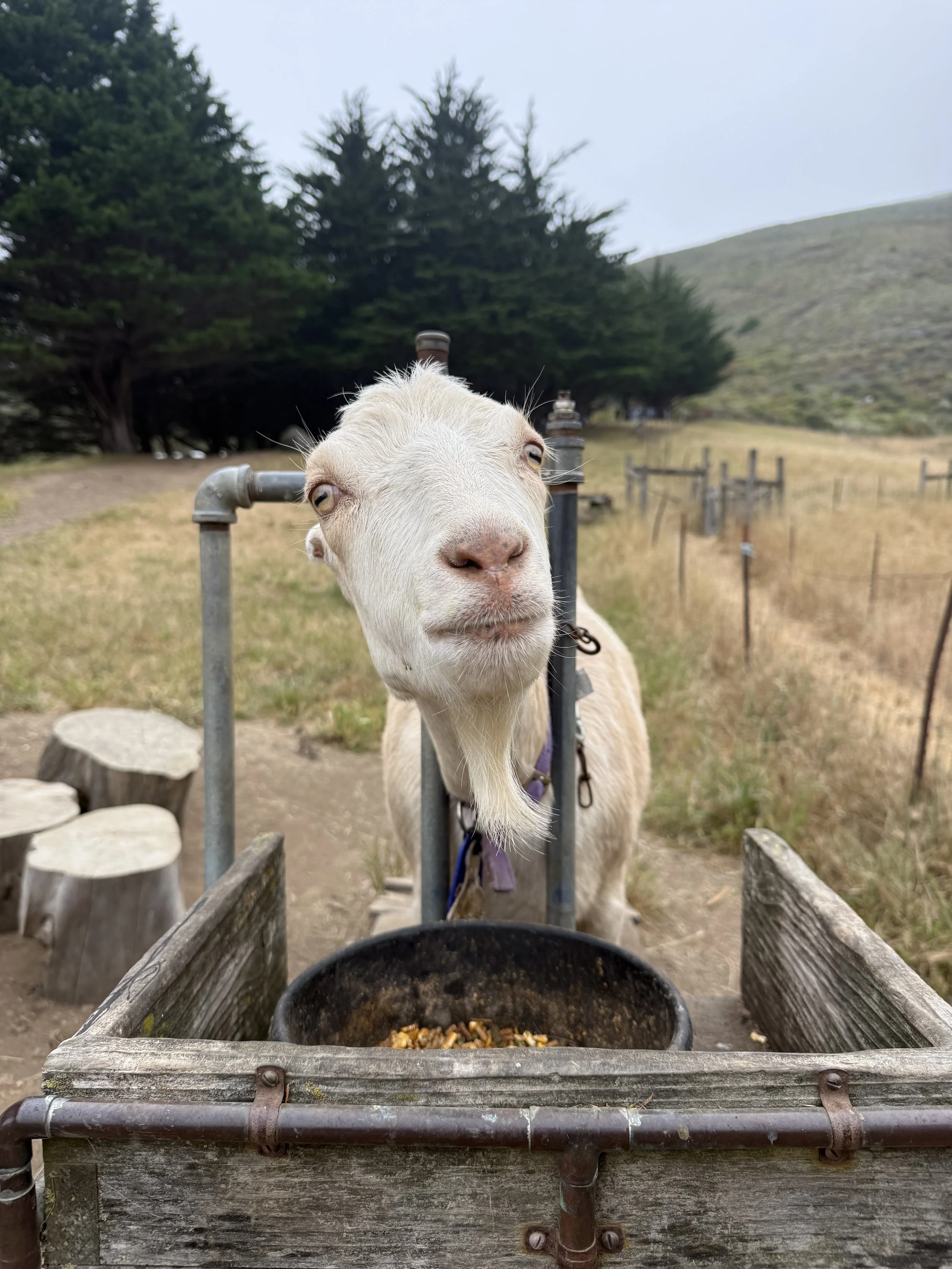
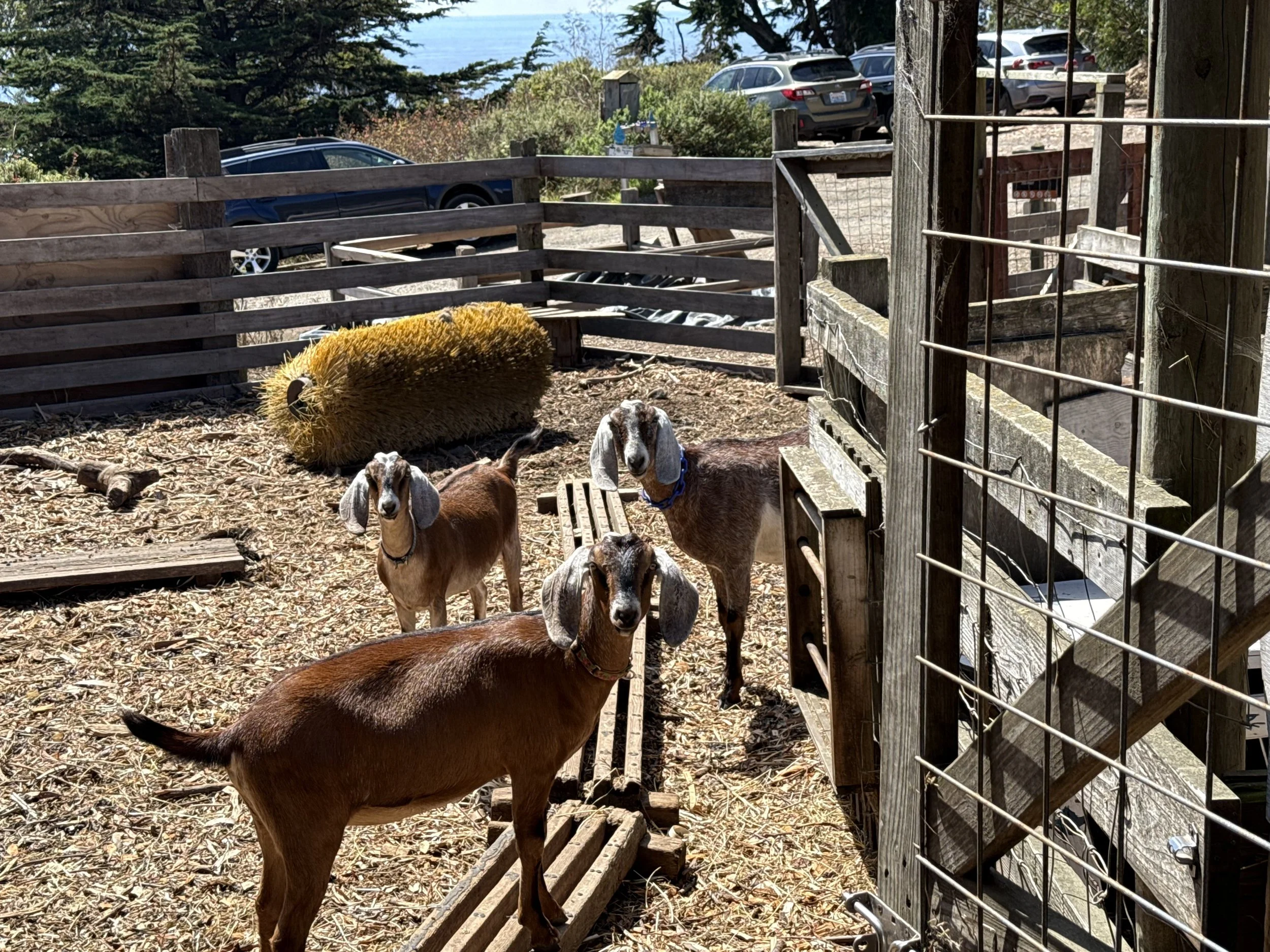
This summer we welcomed two new goat friends to Slide Ranch - Katniss and Spangle. Spangle, a beautiful and timid Nubian from Redwood Hill in Sebastopol, arrived at the end of May. Though we don’t exactly know the origin of her name – likely due to her roan sparkly coat – it matched her slightly dorky, but lovable essence so well that we decided it was quite perfect and have enjoyed its evolution to a variety of interpretations – Spangles, Spangler, Spangelina.
Upon arriving at Slide Ranch, I unloaded Spangle from the truck and could immediately tell the journey and change had her very freaked out. I walked her into our pasture to introduce her to our other goats and immediately, to my great surprise, she veered to the fenceline between the pasture and the enclosure for our Nubian doelings, Boots and Butter. Crying in the way only a Nubian can, she stood and stared at them. They looked back, a bit bemused, as if to say… “do we know you?”. I was touched, but didn’t think much of it, as Spangle had given birth in October, so it was unlikely she would confuse these Nubian babies with her own.
Goats have a very established social hierarchy and the process of establishing a pecking order is usually by headbutting and intimidation. Timid or shy goats are relegated to the bottom of the pyramid – which, in the goat way, is enforced by violence. Spangle spent her first night with the main herd, but it was clear our other goats were putting her in her place and she was not standing up for herself. I was worried – I, as a human, have the natural tendency to anthropomorphize – to project my human reality onto other non-human creatures. In the case of Spangle, I felt horrible and so worried for her.
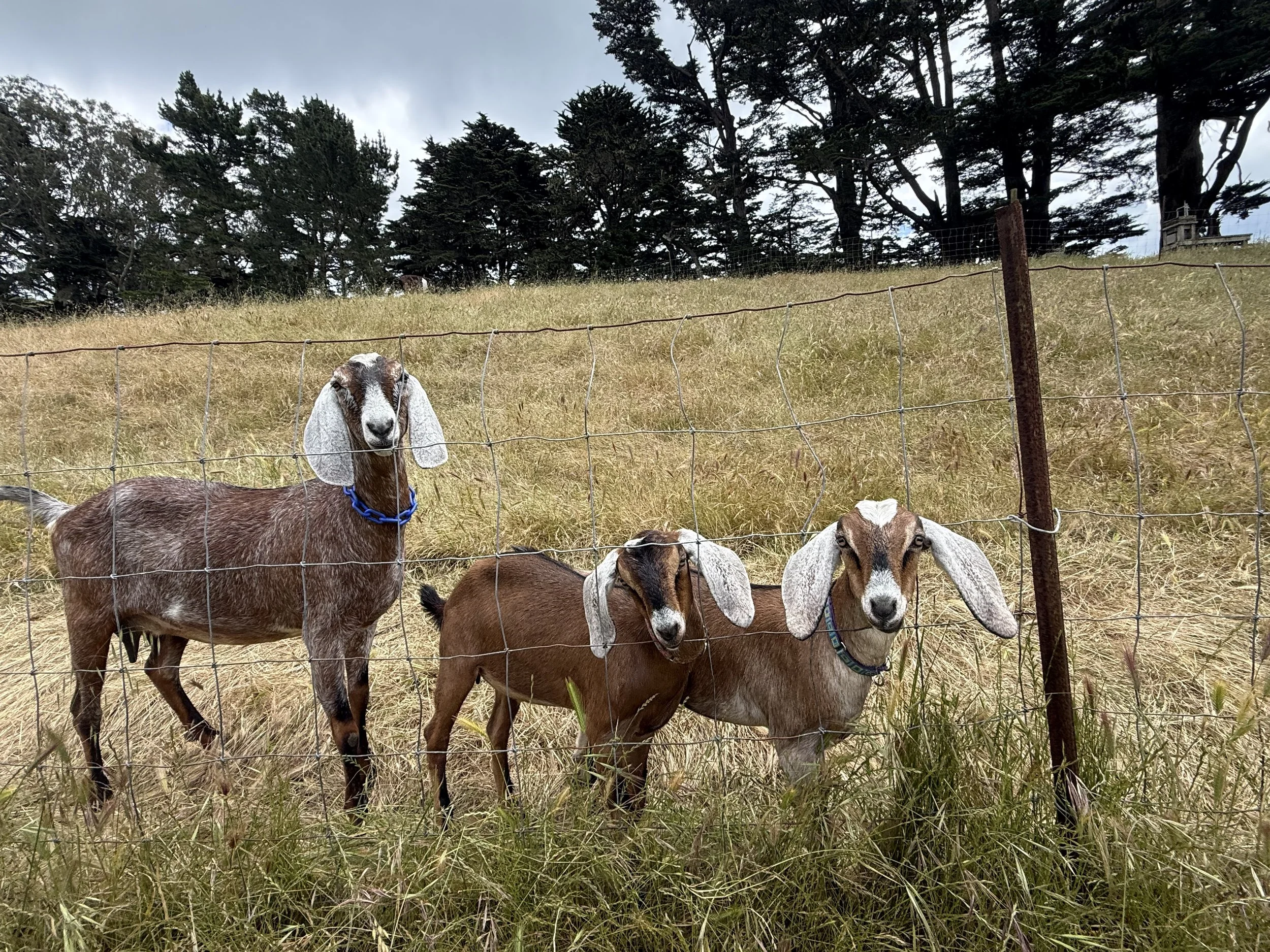
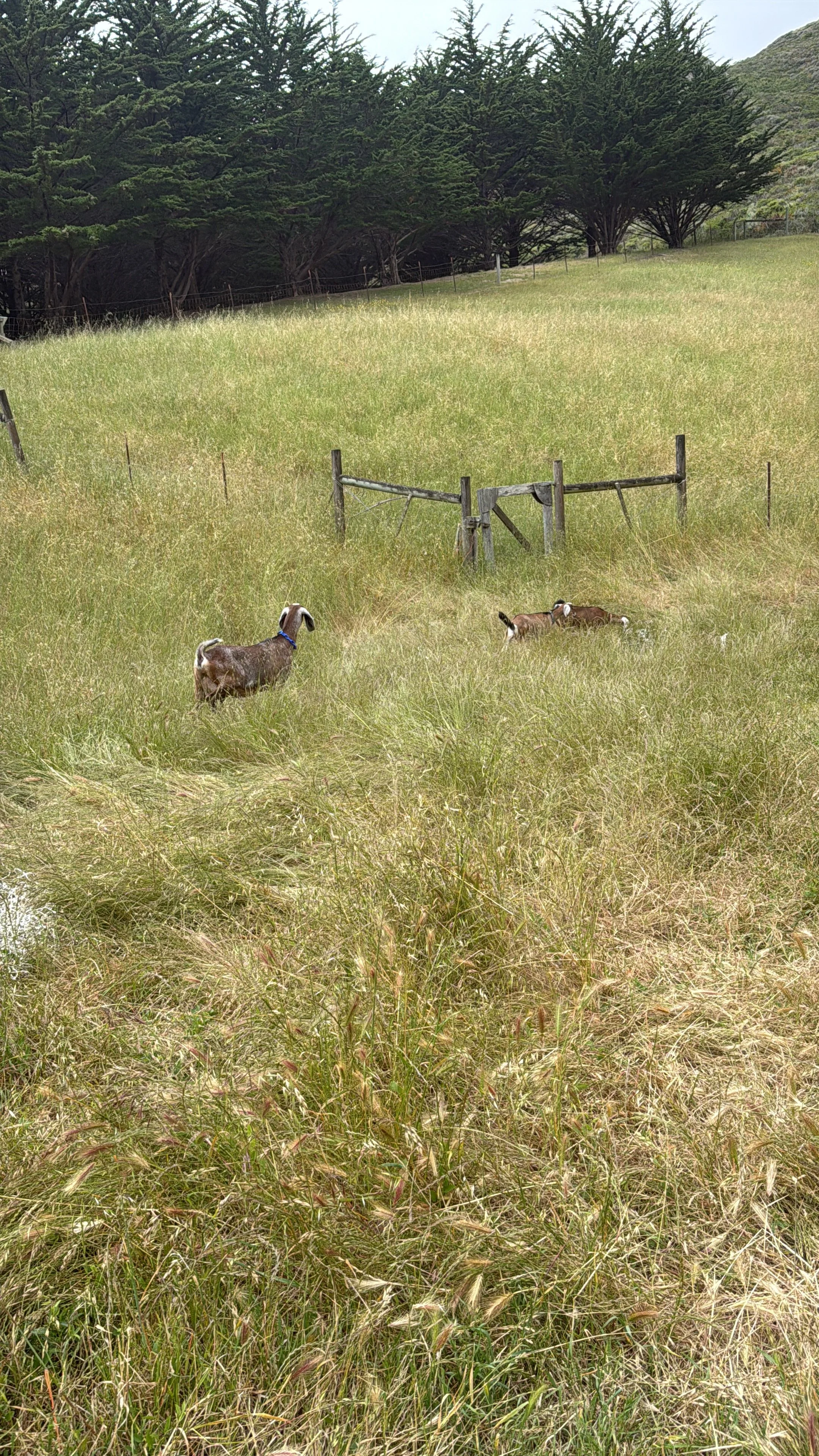
The stress of moving to a totally foreign place along with being bullied, felt like too much for my weak human heart. I decided to listen to Spangle’s cries and move her in with the babies to see if she would be happier there. She bonded to Boots and Butter immediately, only crying when she left their pen to be milked. While the babies at first were confused by this bigger, derpy goat, they quickly bonded and the three became their own mini family, going out to pasture with the herd, but sticking together in their long-eared crew. A very happy outcome for all parties!
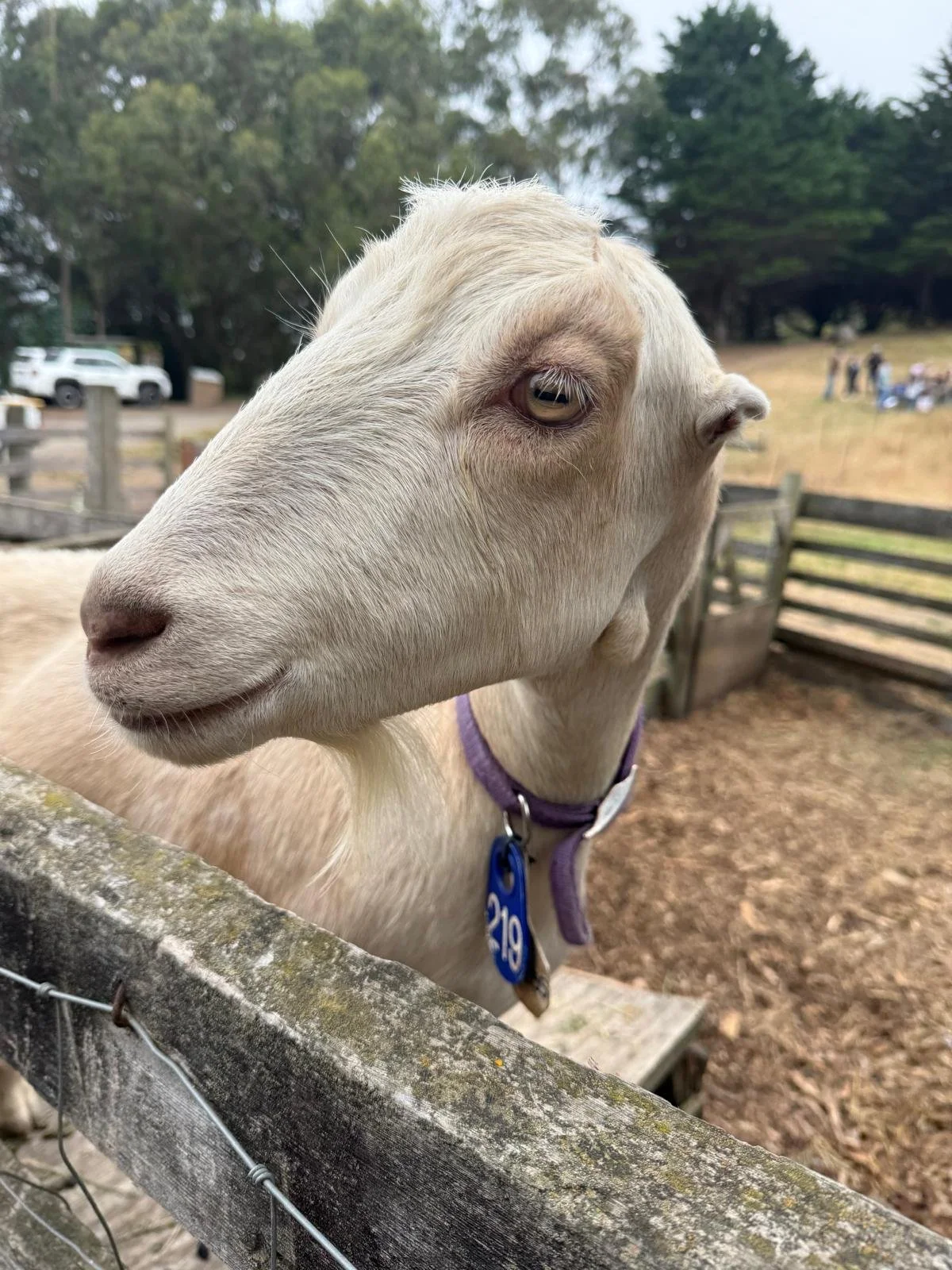
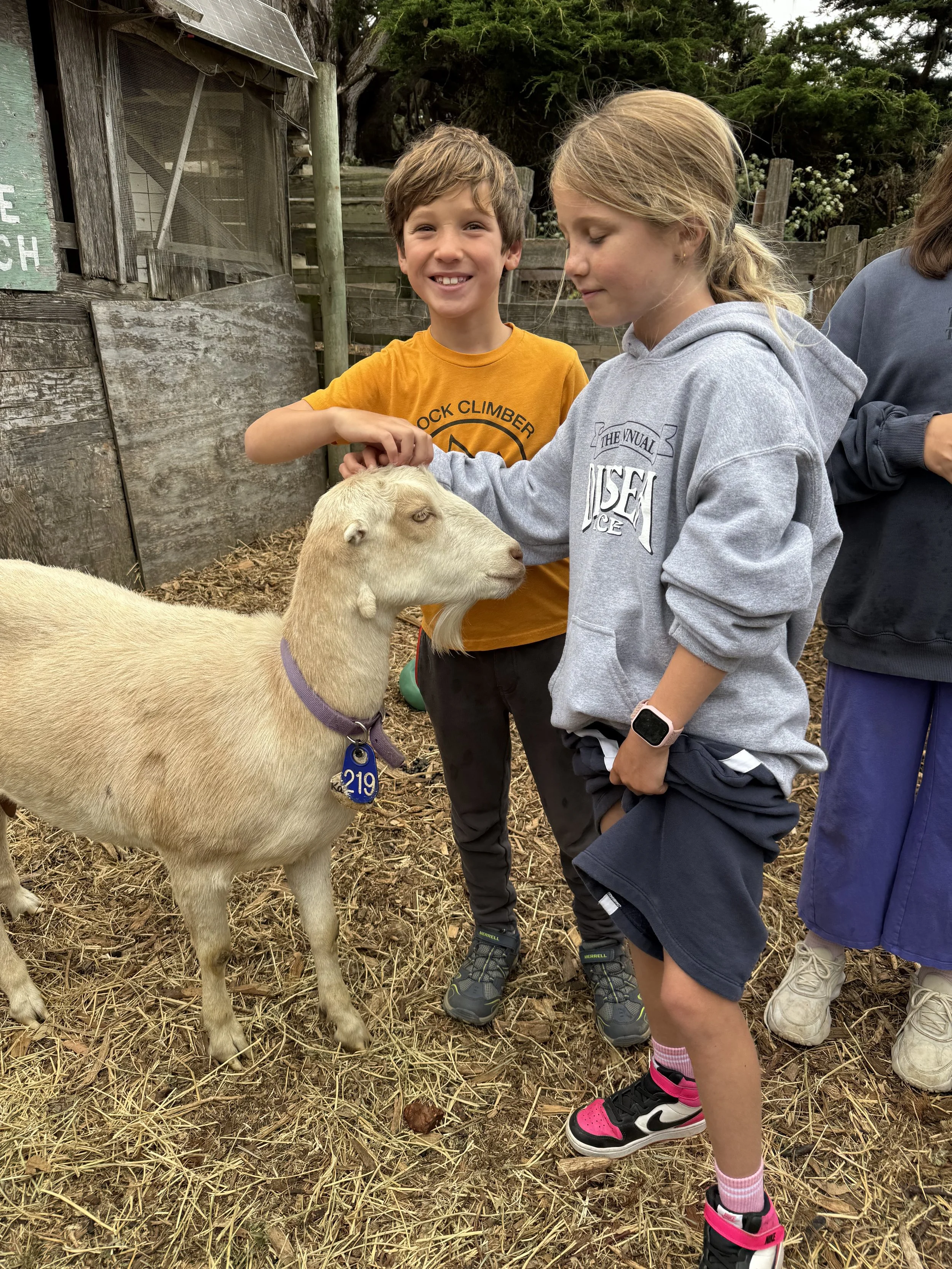
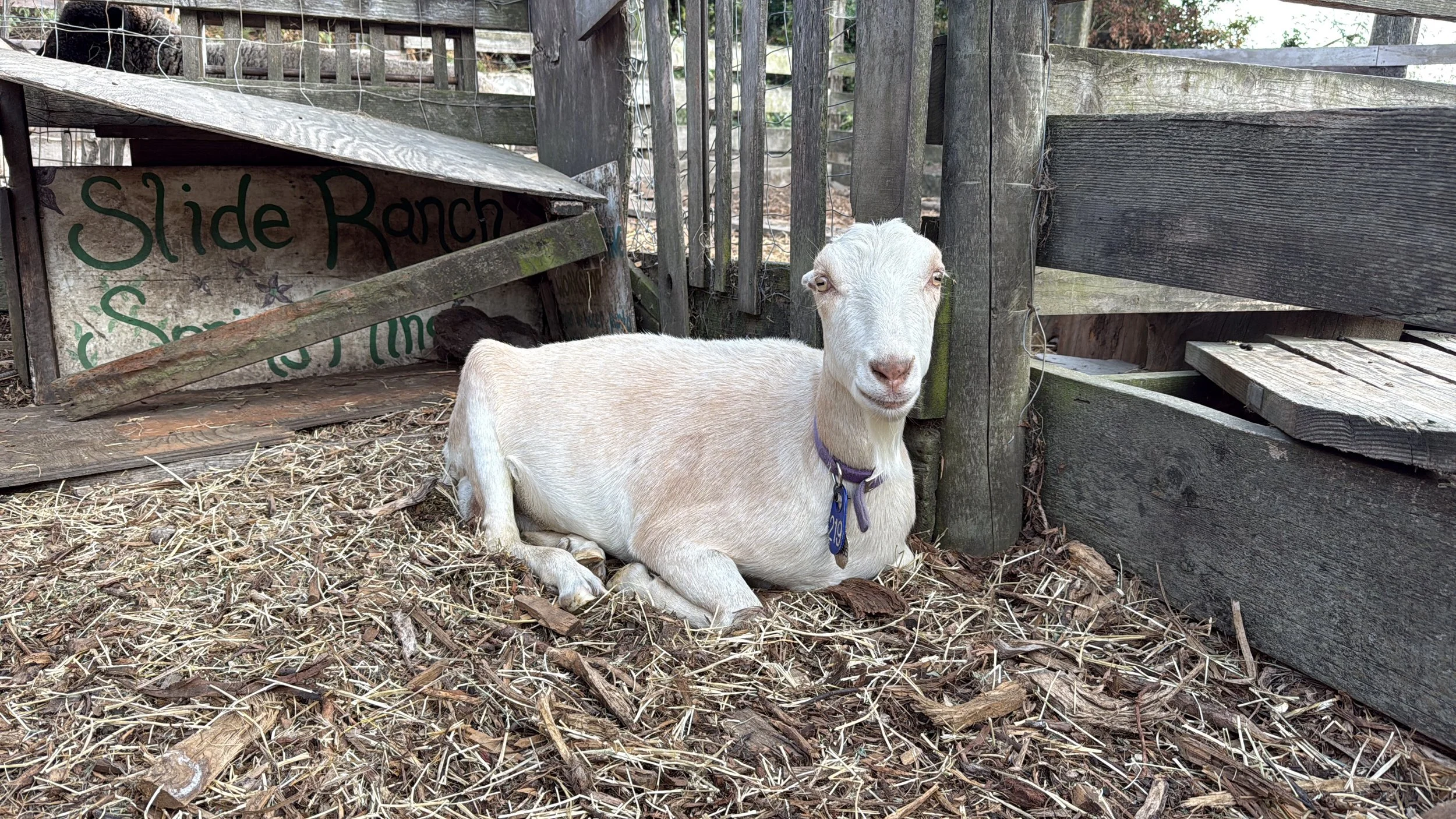
When Katniss, a gentle, sweet blonde LaMancha from Stepladder, arrived in mid-June, I had no choice but to allow the goats to work it out amongst themselves. I chose to educate myself about goat social structures in an attempt to be able to understand and cope with my worry for her. I learned many things about the complex herd dynamics – there is always a queen (at Slide Ranch it is our beloved Althea), and pecking order is decided by age and strength, and determines preferential feeding. The aggression that a new goat faces is a result of the domestication of wild goats – in the wild, unintegrated goats are rarely introduced to the herd. A goat herd is a self contained entity, and the pecking order is actually created to prevent aggression amongst members of the group. Once the order is established, full out contact is not necessary, which reduces chaos. I also learned that our goats see me as a high ranking member of their herd, which is why they follow me when I walk them out to pasture.
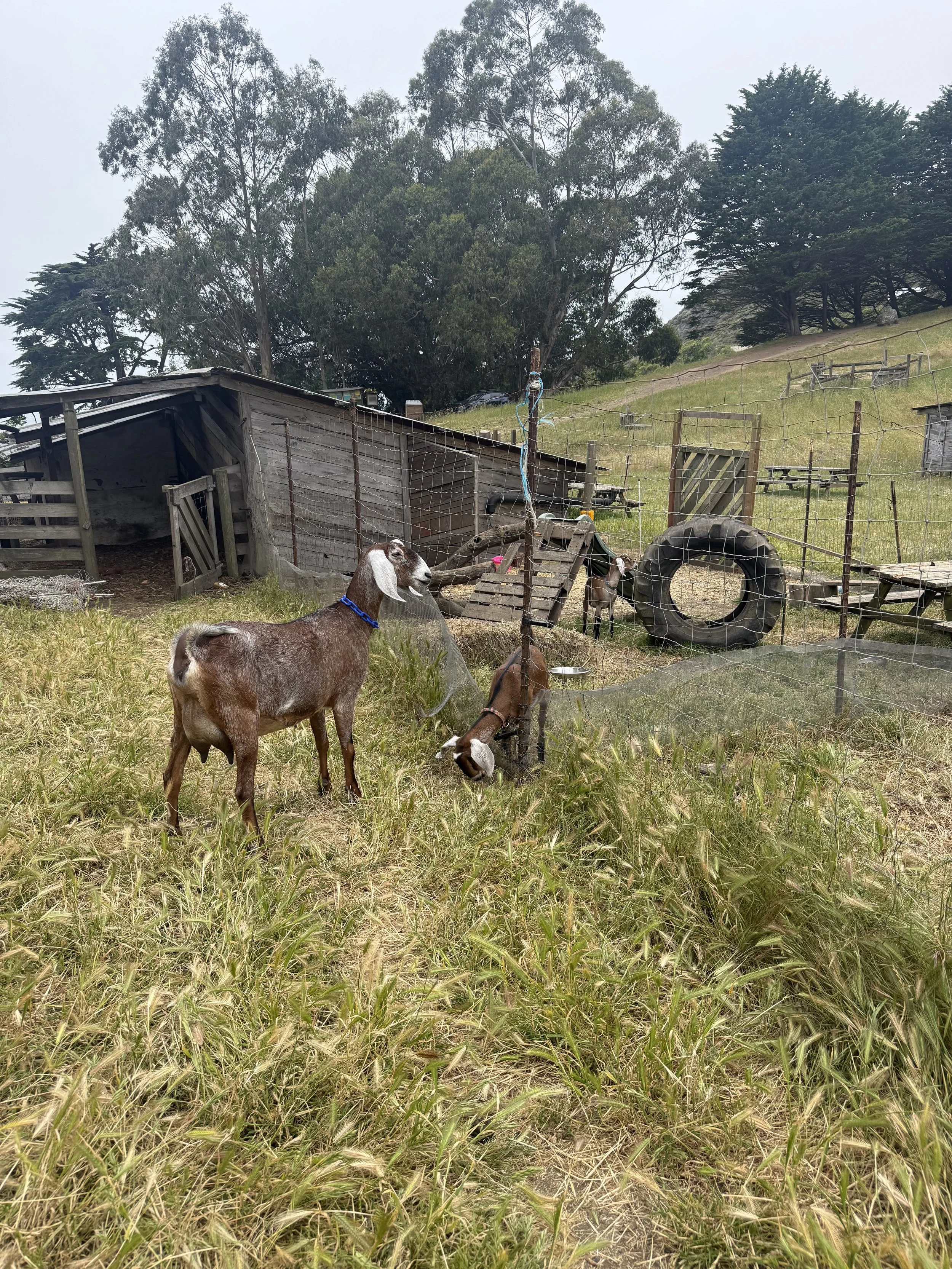
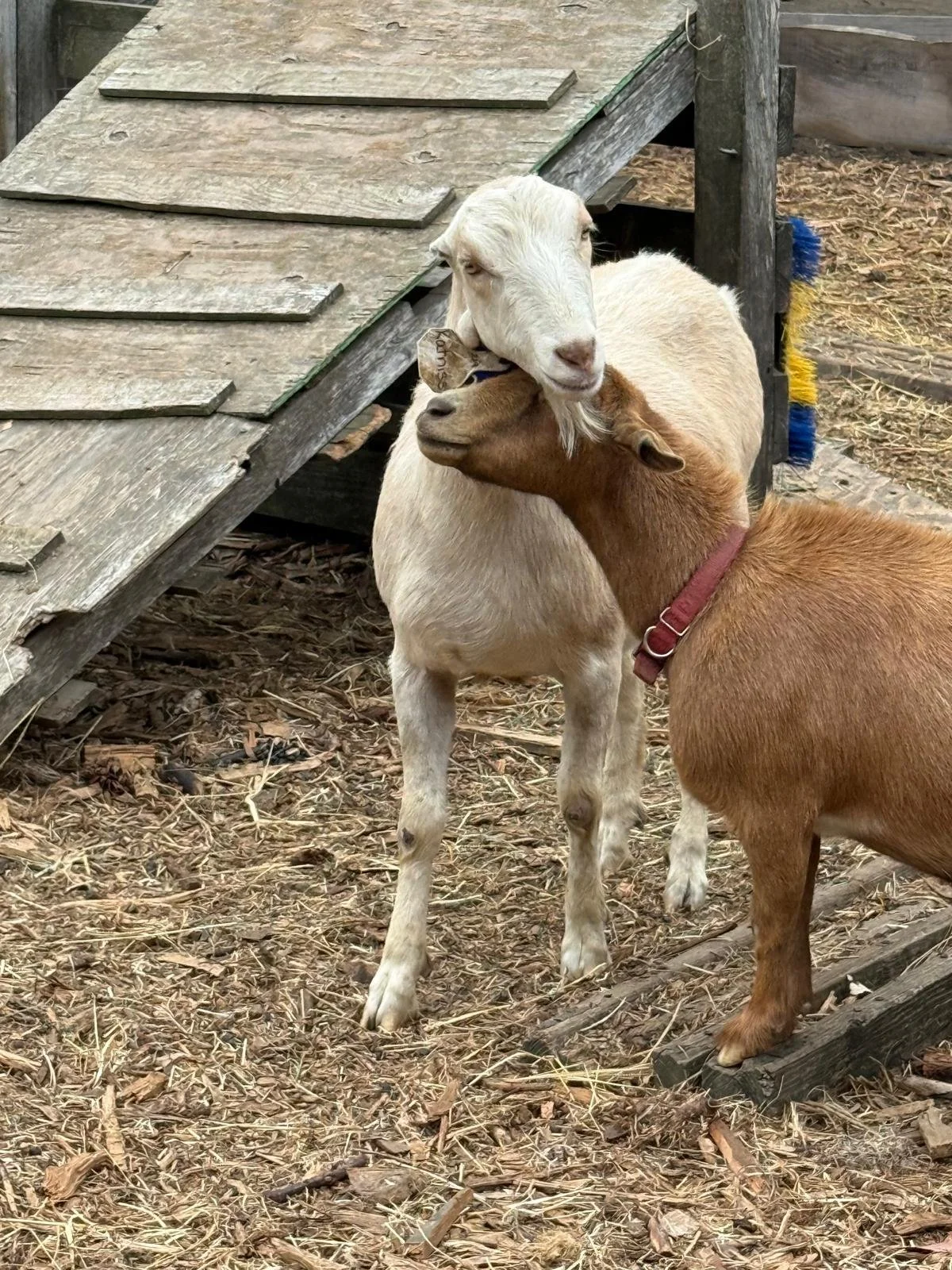
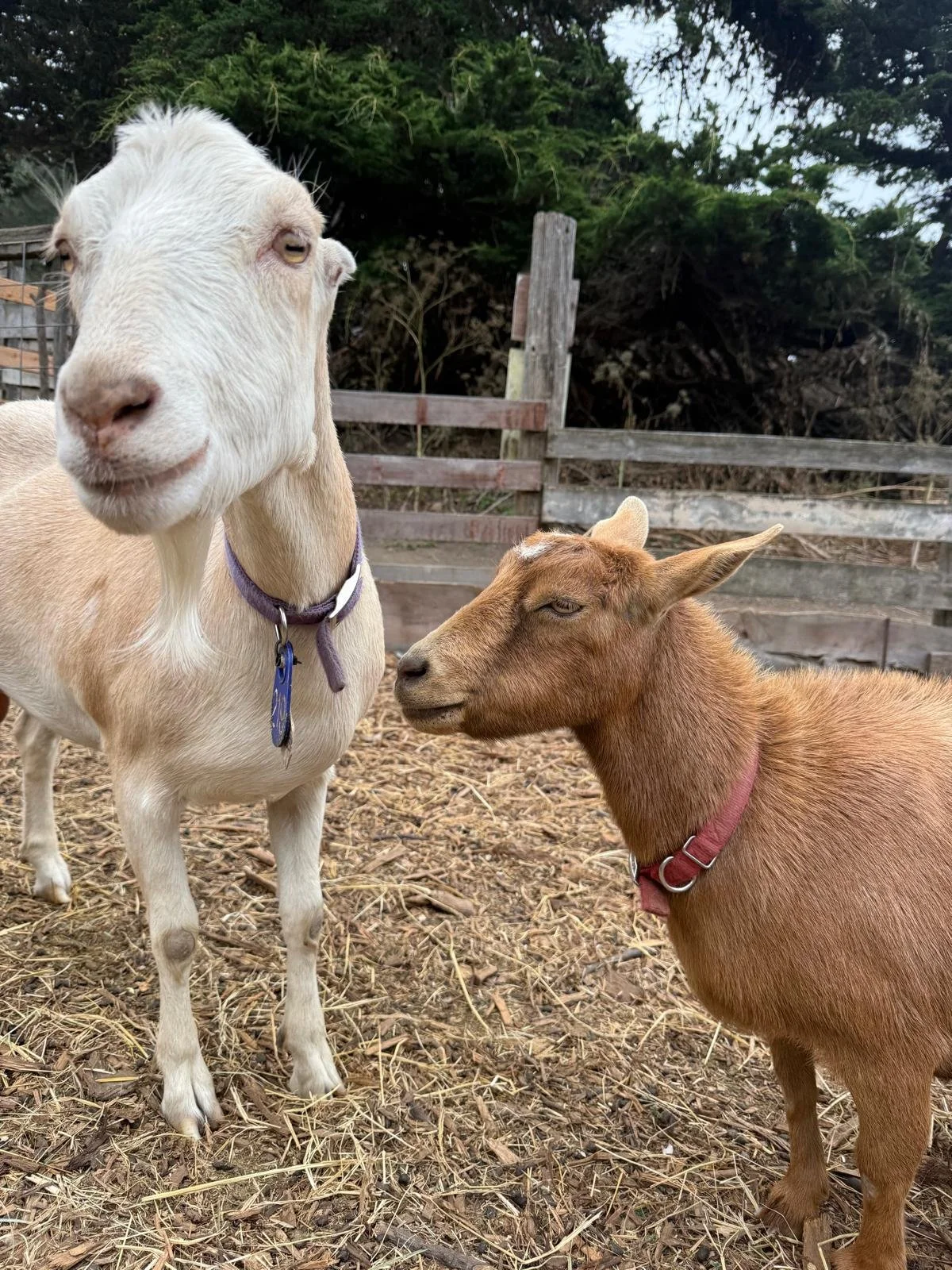
And so yes, Katniss was introduced, and was bullied by our other goats. But, after a short period, she had befriended our Nigerian Dwarves, Anise and Nutmeg, and found her place amongst the herd. She has blossomed as a calm, steady milker and easily become a favorite amongst our summer campers and instructors alike. And I learned an important life lesson about transitions – things take time to get settled into their natural rhythm.
Who knew goats could be such good teachers?
Come spend some time with our goats (and sheep!) during any one of our upcoming Family Farm Days! Visit our events pagoe for dates and more information.