Exploring our Tidepools
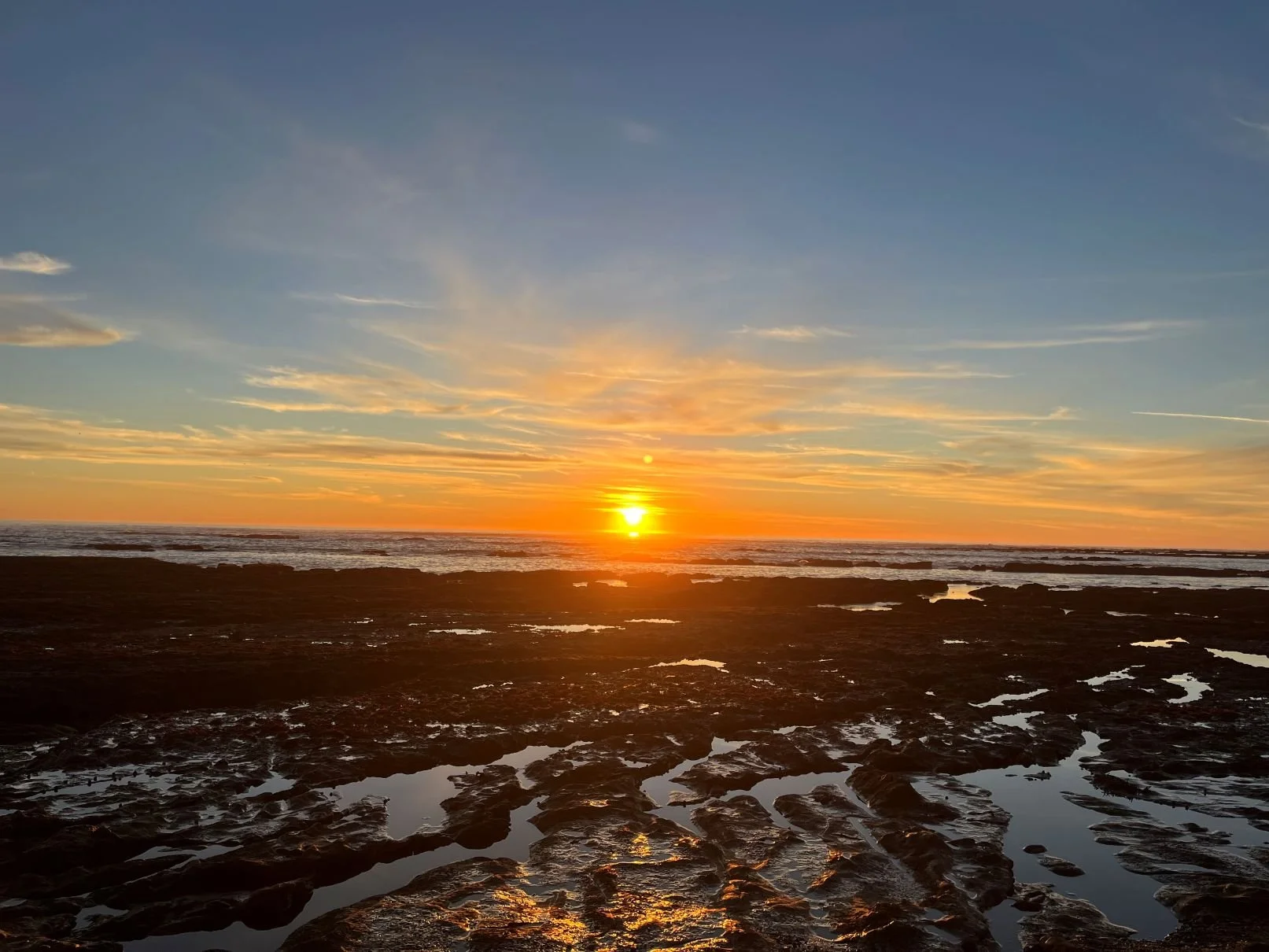
Winter time on the coast can bring beach hazards, flooding, tumultuous waves, and more. But it also brings phenomenal tidepooling. This time of year is best to explore tidepools in Northern California due to the higher frequency of “king” (super low) tides happening during daylight hours. The Northern California coast has a mixed semi-diurnal tide period, meaning that there are two high tides and two low tides each day, with one of each of the tides being higher than the other. The best time to go tidepooling is, naturally, at the lowest possible point during the day. At our beach here at Slide Ranch, any tide under one foot is considered a great opportunity to get down there! Here are my tips and tricks to a successful tidepooling experience:
- First thing’s first, NEVER turn your back to the ocean! The tide is always changing and the ocean is a dynamic beast. And if you want to keep safe and dry, it’s best to always keep an eye out for a sneaker wave.
- Wear wool socks! If your feet do get wet, (which is a great possibility) wool socks will help keep you warm so that you can stay out there longer.
- Move LOW and SLOW. You may be tempted to hurry across the rocks to catch a crab, but be careful! Things like kelp, algae, and seagrass can make the rocks unperceptively slippery.
- Know before you go! Consult a local field guide or look online at iNaturalist to see what types of organisms you should keep an eye out for while you’re there. (see below for common tidepool finds at Slide Ranch)
- Respect the wildlife! Do your best to avoid moving the creatures around too much- you are in their home, after all.
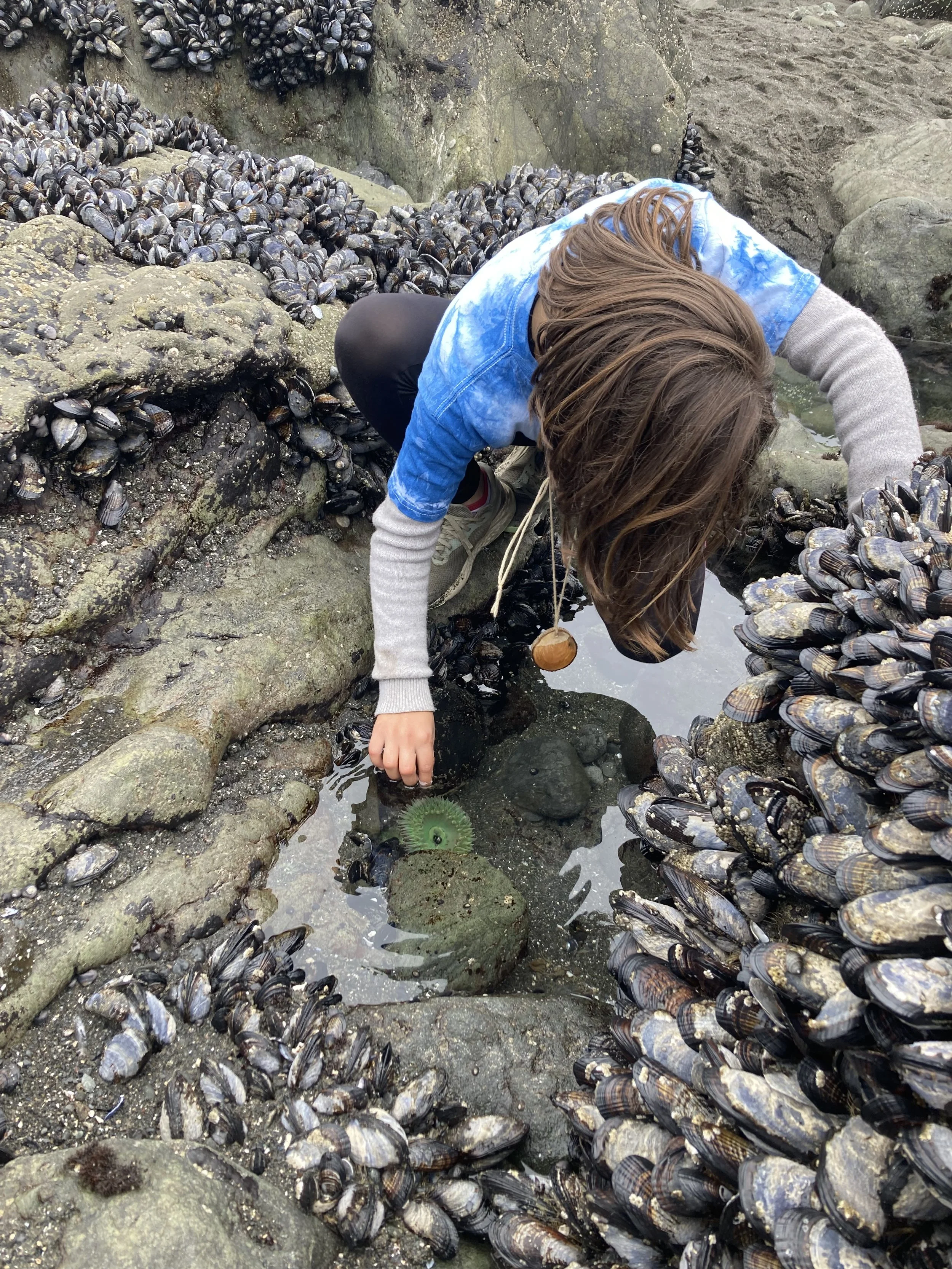
- Bring a bucket! If you are tidepooling with kids, this one is especially for you. A bucket with an inch or two of water at the bottom can be an interactive way to observe some of the creatures of the intertidal zone. Please remember to put everything back before you leave!
- If you take pictures, upload them to iNaturalist! Partaking in community science will help other curious individuals as well as scientists learn more about the environment you are exploring.
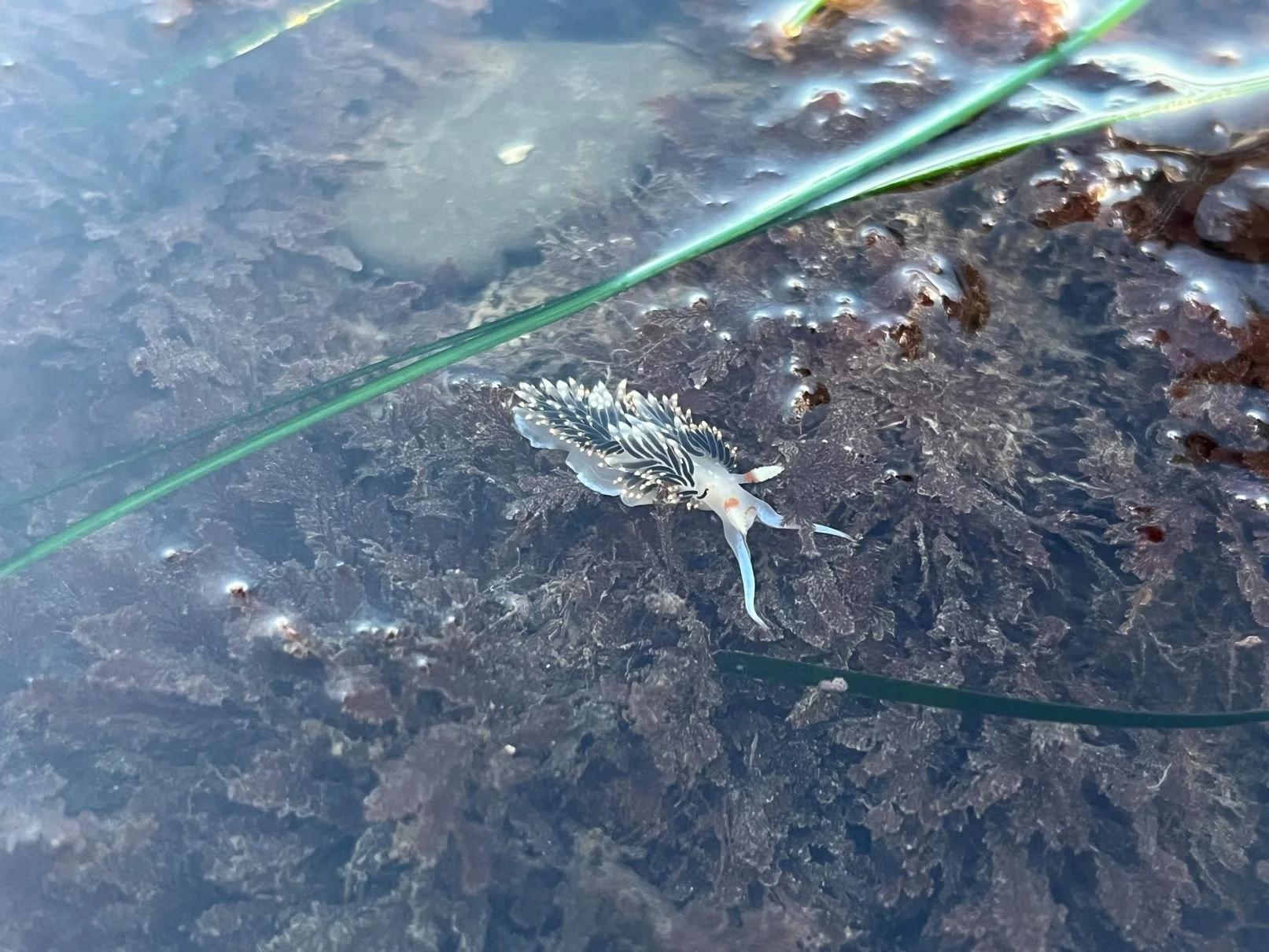
- Explore and be merry! Ask questions! Be curious! Take pictures! Listen to the song “Nudibranch” by my friend Dafunkus to hype yourself up beforehand!
Now that you know what to do to set yourself up for tidepool success, here are some of my favorite things that I think you should keep an eye out for in the tidepools:
- Hermit Crab: They seek out abandoned shells to use as a home, are often eaten by gulls; eat little bits of dead stuff floating in the water; and often fight with each other.
- Giant Green Anemone: A predator of the tidepools catching fish and other tiny animals; have tentacles that can sting their prey (not human skin, though); and curl up on themselves when in danger or out of the water.
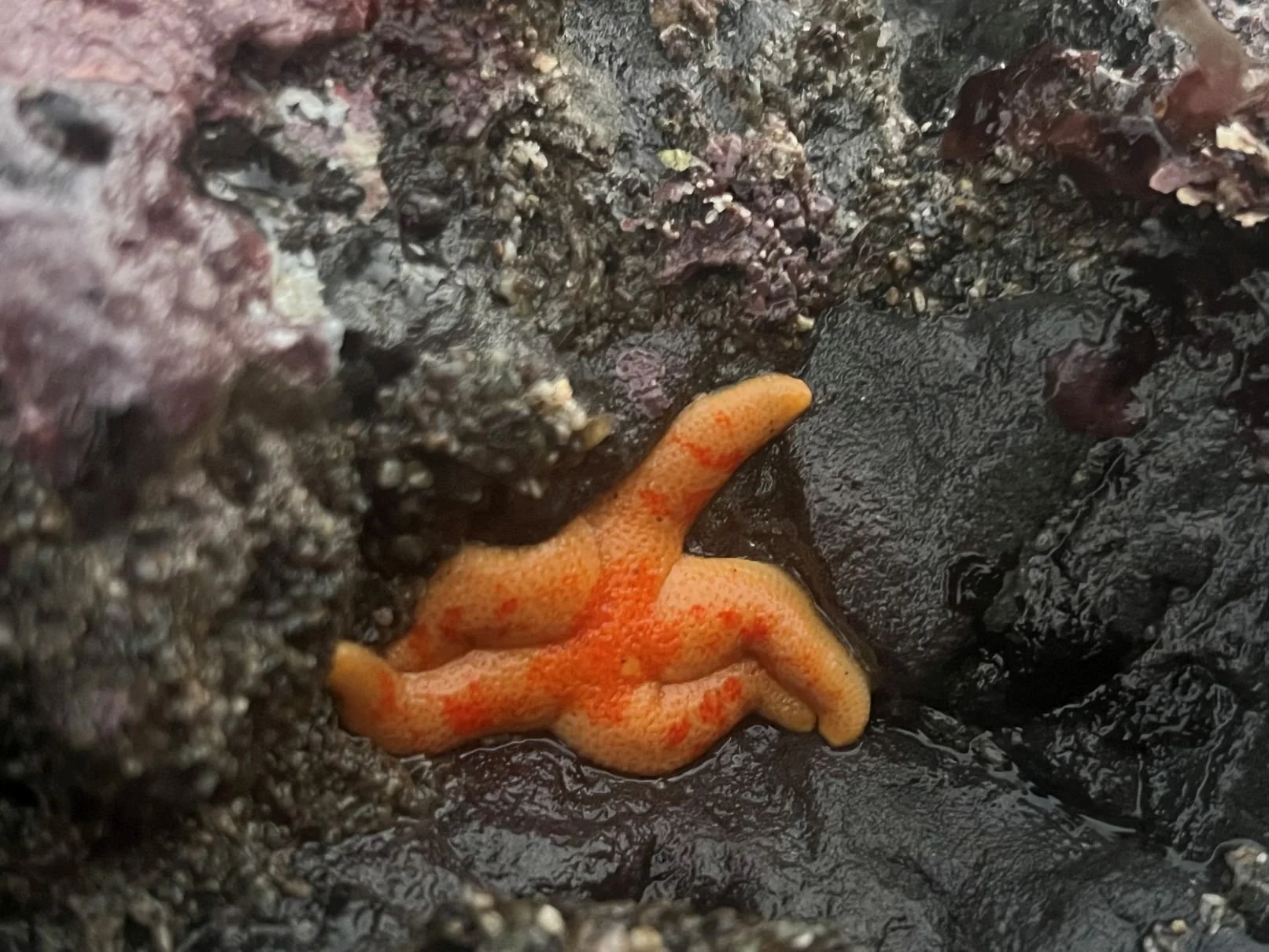
- Ochre Sea Star: The apex predator in this ecosystem eating mussels, limpets, and even anemones; come in a few different colors including orange and purple; have tube feet to move around and attach to their prey; stick their stomachs outside of their bodies to eat and digest
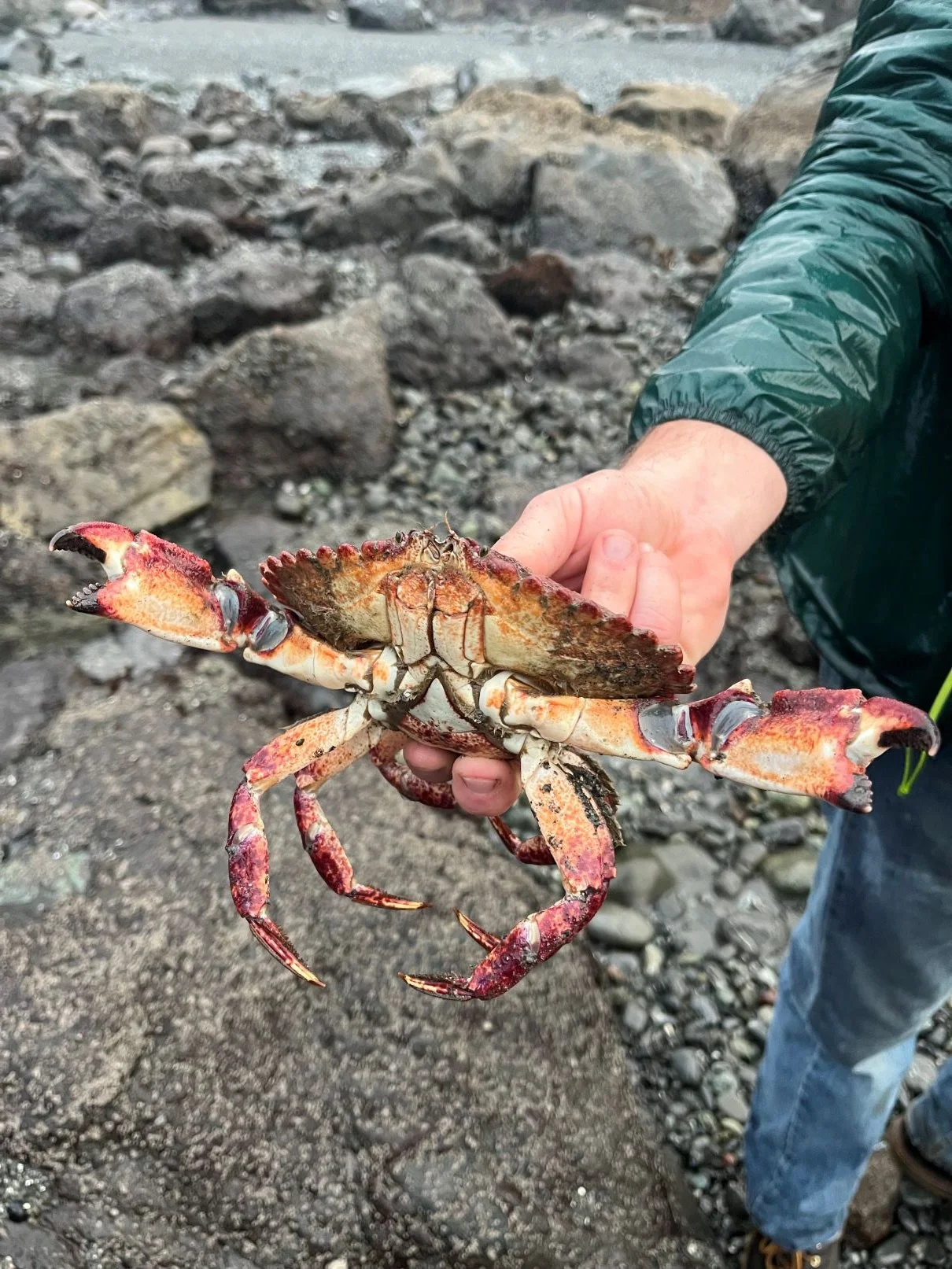
- Lined Shore Crab: Eat snails, algae, and dead plant material; often are hiding between cracks in rocks; run sideways on their eight legs and catch prey with their two front claws; and have a strong hard shell for protection. Be careful picking these up- they pinch!
Happy Tidepooling!